Q3 Wrapped: The Quarter in Markets, No Crystal Ball Required

Have clients been calling with questions about their portfolios? Are they fretting over recent headlines around AI, or wondering why bond prices keep dropping? The past quarter brought some big changes including the first rate hike in three years. 

As we ease into the final quarter of the year, let’s take a quick look at how the last few months shaped up and what it means for your Q4 client conversations.

Fed Rates Rose

In September, the Federal Reserve raised its target range for the federal funds rate by a quarter of a percentage point, bringing it to 3.75%–4.00%. This rise in rates marked the Fed’s first increase since 2023.

Clients may be wondering how this change in direction impacts portfolios. Higher rates put pressure on existing bond prices while creating opportunities to earn more income from newly issued bonds. 

While no one, including the FOMC, can predict its next move, it’s worth having conversations with clients about how a rate hike (and future potential rate hikes) could impact their fixed-income strategy.

We recently covered this rate change in greater detail, which you can read about here.

Bond Prices Felt the Pressure

Rising yields put pressure on bond prices during the quarter, with the Bloomberg U.S. Aggregate Bond Index losing around 3.5% in Q3 (as of September 30).1 Long-term bonds are even more sensitive to interest rate changes than their short-term counterparts, as demonstrated by the 7.8% drop 10+ year Treasury bonds experienced in Q3. 2 

AI Continued Reshaping the Market Conversation

Artificial intelligence and the astronomical amount of debt issuance surrounding it remained hard to escape in Q3, both in the headlines and in major market indexes. So far in 2026 alone, $229 billion has been issued in AI-buildout debt to mega-cap tech firms. That number is expected to hit $420 billion in 2027.2 

Throughout Q3 and most of 2026, the Magnificent Seven (all companies with heavy AI investment) have consistently accounted for around one-third of the S&P 500’s market capitalization.3 

As AI continues to dominate in both the stock and bond markets, Q4 may prompt conversations with clients about potential concentration risk.

Is AI a Bubble? How to Address Clients’ Concerns

For investors who remember the dot-com bubble burst, there may be concerns about whether AI can keep climbing or is headed for a fall. We know we’ve fielded this question from several of our clients (and our clients’ clients!) in recent months.

Here are two things we’ve been cautioning advisors to remember:

  1. Nobody can “time” a bubble.
  2. We don’t even know if AI is in a bubble.

It’s not possible to predict when or if an investment trend has gone too far, how long it will last, or what will cause it to reverse. Only time will tell. 

That said, you can still have productive conversations with clients to address their concerns over a potential AI bubble burst.

Turn the focus inward, to clients’ individual portfolios. Has strong performance from a handful of tech companies caused their allocation to drift? Are they carrying more exposure to one sector than their plan originally called for? Would a downturn create more portfolio risk than the client is comfortable carrying? Are they diversified in other sectors that are less focused on AI investment? If not, it may be time to adjust and reallocate.

Reviewing a client’s portfolio is your opportunity to address their concerns in a methodical way, without introducing speculation, predictions, or emotional impulses to the equation. 

What Moved the Needle for Our Advisor Clients

Clients want to know if what they’re seeing in the news changes what they should be doing with their money. Concerns over rising rates, falling bond prices, and other evolving trends put more pressure on advisors to communicate quickly.

Not only is it on you to understand and analyze what’s happening in the markets, but also to translate it into language clients understand. At the end of the day, clients count on you to connect all this info back to their individual plans. And we know that’s an immense amount of pressure to carry alone! 

An outsourced investment partner helps advisors manage the communication load and more effectively support clients during moments like this. When you have the resources, portfolio context, and clear explanations at the ready, client conversations focus on reinforcing the strategy already in place (rather than speculating about what might happen next).

Looking Ahead to Q4

The Fed is set to meet once more by the end of the month, though there’s no indication yet what their next move might be.

After another quarter of uneven performance across stocks and bonds, it’s likely your clients’ portfolios look different than they did at the start of Q3. Heading into Q4, your job is to help clients understand what’s changed, how it impacted their portfolio, and what they can do to prepare for what the rest of 2026 might bring. 

Sources

1 Bloomberg

2 Morningstar

3 Schwab

Rates Went Up. Here’s How to Talk to Clients About Their Bonds Without Making a Prediction

When clients see changes in their statements or hear about major economic headlines, they want answers from you. As their advisor, you want to help. 

With an entire financial media ecosystem dedicated to debating what the Fed might do at its next meeting, it’s understandable that clients feel concerned.

You do not need to know the Fed’s next move to have a productive conversation about bonds. In fact, trying to predict it distracts from the questions that matter more.

The Federal Reserve raised its target range for the federal funds rate by 25 basis points in September, bringing it to 3.75%–4.00%. Importantly, and what may be causing such a stir, is the fact that this was the first rate increase since 2023. 

With rising interest rates and bond price fluctuations dominating the conversation once again, how should advisors approach the topic with clients? Here’s how to have a productive discussion, without speculating on what might happen next.

First, Talk Through What Happened in September

Before getting into the technical impact of the Fed’s recent move, start by acknowledging why clients are concerned. In September, interest rates rose.

At the same time, bond values are dropping. Clients could see this as a sign that something in their portfolio has gone awry.

This is a chance to provide context without bogging clients down in the details.

Bond prices and interest rates generally move in opposite directions. When rates rise, newly issued bonds can offer higher yields. That makes older bonds paying lower rates less attractive, pushing their prices down. This may be what clients see reflected on their statements.

There is a potential upside, too. When prices fall, yields and future return potential improve. Higher rates create better income opportunities for new money and for the proceeds from bonds that mature or pay interest. Selling bonds after a decline risks missing that healthier environment.

Rising rates might create some short-term discomfort for clients. They also improve the income potential available to fixed-income investors. 

What Matters More than the Next Fed Move?

Nobody can reliably forecast interest rates. Fed policy, inflation, government deficits, demand for Treasuries, economic growth, and market expectations all push on yields at once, and even experts disagree about which one is driving rates at any given moment.

Fortunately, a sound bond strategy can be built around three questions you can answer today, no forecast required.

Is the client being paid enough to lock up money longer?

Longer-term bonds usually pay more, but their prices also swing more when rates move. The extra yield is only worth it if it fairly compensates for that added risk. When longer bonds offer meaningfully more income, extending can make sense. When short- and long-term bonds pay about the same, there’s little reason to stretch.

Is the client being paid enough to take on credit risk?

Lower-quality borrowers pay more to borrow. Sometimes that extra income is generous. Other times, investors take on noticeably more risk for very little additional yield. The question is whether the reward justifies the risk for this particular client and how it fits within their broader fixed-income strategy.

When will the client need the money?

Time horizon and purpose often matter more than anything happening at the Fed.. Money set aside for next year’s spending should be invested differently from money that won’t be touched for a decade.

How to Answer When Clients Ask “Are Bonds Stable?”

Investors tend to associate bonds with safety. When they see a bond fund decline, they wonder what happened and where things went wrong.

Use this opportunity to remind investors that bonds carry risks and that bond rates will fluctuate. For example, bonds are prone to interest-rate risk and credit risk. Fixed-income investments behave differently depending on their maturity, credit quality, structure, and the broader market environment.

That said, fixed income still belongs in a client’s portfolio. You may just need to remind them why.

Bonds help to:

  • Dampen portfolio volatility
  • Produce income
  • Provide diversification
  • Fund known or anticipated spending needs

Script for Advisors

When clients call with concerns, they aren’t looking for an economics lesson. They want to know what’s happening, how it’s going to impact them, and what action (if any) they should be considering.

Here are a few sample talking points for approaching the topic, without becoming speculative:

“ When rates rise, the prices of existing bonds fall. This likely explains some of what you’re seeing in your account right now.”

“New bonds are paying higher yields, which creates opportunities to earn more income as we invest new money or reinvest proceeds from bonds in your portfolio.”

“As for what the Fed does next, we do not need to make that prediction in order for your bond strategy to work. We are looking at what different bonds are paying today, how much additional income we can earn for taking on additional risk, and when you will want to access the money. Those are the things we can evaluate today, and they are more important to your plan than trying to guess the Fed’s next move.”

While each conversation will vary, the underlying message should remain the same. Explain what happened, put the impact in context, and bring the conversation back to the factors you can evaluate and control together.

Help Clients Keep Calm and Focused

Even the Federal Open Market Committee can’t reliably predict what it’ll do next. If the ones making the decision can’t reliably say either way, no advisor should speculate either.

Not having all the answers can be frustrating for clients. Use this uncertainty as a learning opportunity to help them see, in real time, the difference between what can be controlled and what can’t. A plan built around time horizon and purpose gives clients steadier footing than a correct guess about the Fed’s next move.

What Does Radical Integrity from the Fractional CIO do for a Planning Focused Advisor?

Some people are shocked to hear this, but the reality is that no matter how much we want to scale and help advisor clients do the same, there are some advisors we politely decline to work with.

That’s not a reflection of their success, their intelligence, or their commitment to clients. In many cases, it’s the opposite. They’re strong firms with capable teams and thoughtful approaches. But even then, the fit isn’t always there. Often, the lack of fit comes from a difference in investment philosophy, though there are a number of things that can indicate misalignment.

Over time, we’ve come to understand that our role only works when there is real alignment—alignment in how decisions are made, how we view investments in terms of a client’s financial plan, and how responsibility is shared. Without that, even the most well-intentioned partnership tends to create friction. Not immediately, but gradually, as small differences compound into larger ones.


But, the East Bay Investment Philosophy Remains the Same

Because of that, our philosophy doesn’t change depending on who we’re speaking with. We don’t reshape it to match what someone wants to hear, and we don’t move forward simply because an opportunity is there. If anything, we tend to slow conversations down. We ask more questions. We look for the places where things might not fit as much as the places where they do.

There are times when that clear path forward is to engage. There are also times when it leads to a different conclusion—that another path is the best course of action (in a few cases, we’ve recommended firms have their own in-house CIO), that a firm’s current approach is working well, or that the structure we provide isn’t what they need right now.


Clarity Matters When it Comes to Choosing a Fractional CIO

That kind of clarity matters more than it might seem.

Investment management at the level many advisory firms operate is not just about capability. It’s about how decisions hold up under pressure, how a process scales as complexity increases, and how responsibility is carried over time.

Those things don’t improve simply by adding another party. They improve when the structure around them is coherent, aligned—and clearly understood.

We have a clear view of the situations where we can be helpful. We also have a clear view of where we can’t. Both are equally important.

And when that clarity is present, it creates something else: confidence. Confidence in the process, in the decisions being made, and in how those decisions are communicated to clients and prospects.


Forced Decisions Tend to End Up Badly

It would be easy to treat every prospective client conversation as something to win. But in our experience, that approach tends to undermine the very outcomes firms are trying to achieve.

When a partnership is forced, the work becomes heavier, decisions take longer, and confidence erodes instead of builds. 

When the fit is right, the opposite happens.That can look like a more durable investment process, advisors having more space to focus on their clients, and decisions being made with greater consistency and less strain. When fit is aligned, it doesn’t feel like something added on top of the business—it becomes part of the structure that supports it.

And just as importantly, it creates a sense of comfort—the kind that comes from knowing you have credentialed and experienced investment professionals providing insight and guidance.  


There is No Outworking Misalignment

For a planning-focused advisor, this kind of discipline creates a different experience entirely.

It removes the pressure to justify decisions that don’t quite fit and replaces it with a structure that is consistent, explainable, and built to hold up over time.

It also creates capacity—not just in hours, but in mental space. Advisors are no longer required to be the investment expert in every moment, which allows them to redirect their energy toward planning, relationships, and the parts of the business that matter most to them.

And over time, it connects them to a broader community of advisors who are thinking about these same challenges in a similar way—creating opportunities to share ideas, compare approaches, and continue refining how they serve clients.

Instead of navigating the tension between what feels right and what’s scalable, advisors are able to operate from a position of clarity—knowing that the investment process behind their recommendations is aligned with how they want to serve clients.

And that makes all the difference.

If you’re ready to explore a partnership with us about how we can help: Let’s TALK!

Is the US dollar at risk of losing its status as the world’s reserve currency?

With the weakening of the US dollar relative to a basket of other currencies so far in 2025, we have received questions about whether the US dollar is in jeopardy of losing its reserve currency status. 
   

First, let’s start by asking the question, “What does it mean to be a reserve currency?”  It means many things, including that the currency is held in large amounts by central banks worldwide.  Additionally, major transactions, including those involving commodities such as oil and gas, are typically priced in the reserve currency. Another important feature is that, for a currency to function as a reserve currency, it requires liquid and open capital markets, as well as widespread confidence in its stability among market participants.  

It is safe to say all these boxes can be checked for the US dollar, but contrast it against the Chinese yuan renminbi (or simply, the yuan), for example, which has been mentioned as a possible replacement; its markets are not fully open, and it does not have the full confidence of global investors.  Similarly, one could argue that Bitcoin, which has also been suggested as a replacement for the US dollar, does not meet the criteria mentioned above. 

Let’s remember that if the US were to lose its status as the reserve currency, another currency would need to take its place.  What currency would replace the US dollar as the reserve currency?  This is an important question that needs to be answered if there is serious consideration for the US dollar to lose its reserve status.  As of 2024, the USD comprised 58% of global foreign currency reserves with about 20% in euro, 6% in Japanese yen, 5% in British pound, and 2% in the Chinese renminbi.  In short, while it is plausible that it could happen in the future, there is no currency close to replacing the US Dollar as the global reserve currency in the imminent future.  


East Bay Investment Solutions, a Registered Investment Advisory firm, supplies investment research services under contract.

This document contains general information, may be based on authorities that are subject to change, and is not a substitute for professional advice or services. This document does not constitute tax, consulting, business, financial, investment, legal or other professional advice, and you should consult a qualified professional advisor before taking any action based on the information herein. This document is intended for the exclusive use of East Bay clients, and/or clients or prospective clients of the advisory firm for whom this analysis was prepared in conjunction with the EAST BAY TERMS OF USE, supplied under separate cover. Content is privileged and confidential. Information has been obtained by a variety of sources believed to be reliable though not independently verified. To the extent capital markets assumptions or projections are used, actual returns, volatility measures, correlation, and other statistics used will differ from assumptions. Historical and forecasted information does not include advisory fees, transaction fees, custody fees, taxes or any other expenses associated with investable products unless otherwise noted. Actual expenses will detract from performance. Past performance does not indicate future performance.

The sole purpose of this document is to inform, and it is not intended to be an offer or solicitation to purchase or sell any security, or investment or service. Investments mentioned in this document may not be suitable for investors. Before making any investment, each investor should carefully consider the risks associated with the investment and make a determination based on the investor’s own particular circumstances, that the investment is consistent with the investor’s investment objectives. Information in this document was prepared by East Bay Investment Solutions. Although information in this document has been obtained from sources believed to be reliable, East Bay Investment Solutions does not guarantee its accuracy, completeness, or reliability and are not responsible or liable for any direct, indirect or consequential losses from its use. Any such information may be incomplete or condensed and is subject to change without notice.

Visit eastbayis.com or more information regarding East Bay Investment Solutions.


What Is the Federal Reserve — and Why Does It Matter?

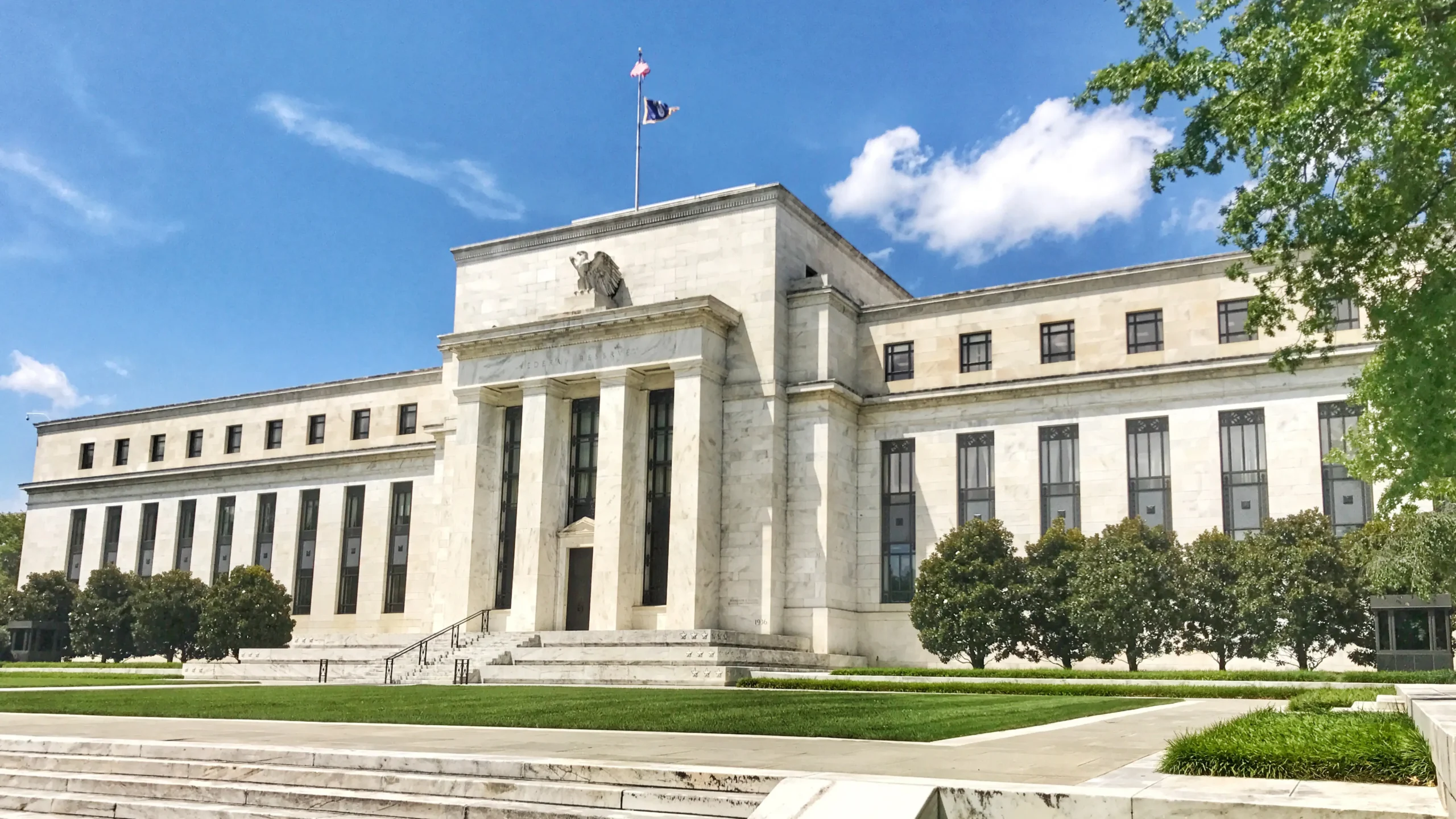
The Federal Reserve Building

The U.S. Federal Reserve System, known simply as “the Fed,” often dominates headlines. Whether it’s interest rate hikes, inflation concerns, or economic forecasts, the Fed is a central figure in shaping the financial environment we all live in.

But what exactly is the Fed, and why does it matter for investors like you?

How the Fed Came to Be

The Fed was created in 1913 by the Federal Reserve Act as a response to financial crises in the early 20th century. In the decades that followed, key legislation was introduced that strengthened the Fed’s authority and independence: the Federal Open Market Committee to centralize monetary policy decision-making (Glass-Steagall Act of 1933 & Banking Act of 1935) and gain political independence (Treasury-Federal Reserve Accord of 1951). The Fed’s role then — and now — is to help stabilize the U.S. financial system and prevent undue stress on the economy. Today, the Fed operates as the nation’s central bank with a clear mandate:

  • Maximize employment
  • Keep prices stable

Put simply, the Fed’s job is to support a healthy balance where Americans can find work and afford goods and services.

The Fed’s Many Roles

While setting interest rates gets the most attention, the Fed’s responsibilities extend further:

  • Supervision & Regulation: Overseeing financial institutions to promote safety and soundness.
  • Payment Systems: Ensuring the U.S. dollar can move securely and efficiently.
  • Consumers & Communities: Researching how policies impact everyday households and communities.

Structure: More Than One Person

Although headlines often focus on the Fed Chair, the Fed is far from a one-person show.

  • 12 Regional Reserve Banks each have a president who provides key insights and data.
  • The Federal Reserve Board of Governors is made up of seven members nominated by the President and confirmed by the Senate.
  • The Federal Open Market Committee (FOMC) — a 19-member group — sets interest rate policy.

At any given FOMC meeting, only 12 members vote: all seven governors, the New York Fed president, and four rotating regional bank presidents.

Voting, Consensus, and Dissent

Here’s what most people don’t realize: the Fed Chair — currently Jerome Powell — has just one vote out of twelve. No veto power. No special privileges.

The Chair’s job is to lead discussion and guide the group toward consensus. In fact, consensus is the preferred outcome, since it signals unity and confidence in the Fed’s outlook. Still, dissenting votes do occur, usually during periods of economic uncertainty. These disagreements remind us that the Fed isn’t immune to differing perspectives — a healthy sign of rigorous debate.

Why Independence Matters

Perhaps the Fed’s most important trait is its credibility. For more than 75 years, the Fed has operated with independence from both political and private pressures.

Without this autonomy, markets and the public could lose trust — with potentially severe consequences. Independence doesn’t mean a lack of accountability, though. The Fed’s layered structure, long terms, and built-in checks and balances are designed to keep it credible, transparent, and focused on its dual mandate: stable prices and maximum employment.

The Bottom Line on The Fed Now

The Fed is more than a single person making pronouncements on interest rates. It’s a complex system designed to promote stability, independence, and trust in the U.S. financial system.

And while news headlines may zero in on the Fed Chair, the real story is about consensus, credibility, and the ongoing effort to keep our economy healthy.

If you have questions about this or any other investment-related news, the Outsourced Chief Investment Officer (OCIO) team at East Bay Investment Solutions–an investment management solution for planning-focused advisors ready to scale with the support they need–are here to be your sounding board.

If you’d like to meet with our team about taking some weight off your plate and preparing your advisory firm to scale,  Let’s Talk!

Our East Bay Investment Solutions Outsourced Chief Investment Officer (OCIO) team is eager and ready to help.


East Bay Investment Solutions, a Registered Investment Advisory firm, supplies investment research services under contract.

This document contains general information, may be based on authorities that are subject to change, and is not a substitute for professional advice or services. This document does not constitute tax, consulting, business, financial, investment, legal or other professional advice, and you should consult a qualified professional advisor before taking any action based on the information herein. This document is intended for the exclusive use of East Bay clients, and/or clients or prospective clients of the advisory firm for whom this analysis was prepared in conjunction with the EAST BAY TERMS OF USE, supplied under separate cover. Content is privileged and confidential. Information has been obtained by a variety of sources believed to be reliable though not independently verified. To the extent capital markets assumptions or projections are used, actual returns, volatility measures, correlation, and other statistics used will differ from assumptions. Historical and forecasted information does not include advisory fees, transaction fees, custody fees, taxes or any other expenses associated with investable products unless otherwise noted. Actual expenses will detract from performance. Past performance does not indicate future performance.

The sole purpose of this document is to inform, and it is not intended to be an offer or solicitation to purchase or sell any security, or investment or service. Investments mentioned in this document may not be suitable for investors. Before making any investment, each investor should carefully consider the risks associated with the investment and make a determination based on the investor’s own particular circumstances, that the investment is consistent with the investor’s investment objectives. Information in this document was prepared by East Bay Investment Solutions. Although information in this document has been obtained from sources believed to be reliable, East Bay Investment Solutions does not guarantee its accuracy, completeness, or reliability and are not responsible or liable for any direct, indirect or consequential losses from its use. Any such information may be incomplete or condensed and is subject to change without notice.

Visit eastbayis.com or more information regarding East Bay Investment Solutions.

What Is the Federal Reserve — and Why Does It Matter?

The Federal Reserve Building

The Federal Reserve Building 

What Is the Federal Reserve — and Why Does It Matter?

The U.S. Federal Reserve System, known simply as “the Fed,” often dominates headlines. Whether it’s interest rate hikes, inflation concerns, or economic forecasts, the Fed is a central figure in shaping the financial environment we all live in.

But what exactly is the Fed, and why does it matter for investors like you?

How the Fed Came to Be

The Fed was created in 1913 by the Federal Reserve Act as a response to financial crises in the early 20th century. In the decades that followed, key legislation was introduced that strengthened the Fed’s authority and independence: the Federal Open Market Committee to centralize monetary policy decision-making (Glass-Steagall Act of 1933 & Banking Act of 1935) and gain political independence (Treasury-Federal Reserve Accord of 1951). The Fed’s role then — and now — is to help stabilize the U.S. financial system and prevent undue stress on the economy. Today, the Fed operates as the nation’s central bank with a clear mandate:

  • Maximize employment
  • Keep prices stable

Put simply, the Fed’s job is to support a healthy balance where Americans can find work and afford goods and services.

The Fed’s Many Roles

While setting interest rates gets the most attention, the Fed’s responsibilities extend further:

  • Supervision & Regulation: Overseeing financial institutions to promote safety and soundness.
  • Payment Systems: Ensuring the U.S. dollar can move securely and efficiently.
  • Consumers & Communities: Researching how policies impact everyday households and communities.

Structure: More Than One Person

Although headlines often focus on the Fed Chair, the Fed is far from a one-person show.

  • 12 Regional Reserve Banks each have a president who provides key insights and data.
  • The Federal Reserve Board of Governors is made up of seven members nominated by the President and confirmed by the Senate.
  • The Federal Open Market Committee (FOMC) — a 19-member group — sets interest rate policy.

At any given FOMC meeting, only 12 members vote: all seven governors, the New York Fed president, and four rotating regional bank presidents.

Voting, Consensus, and Dissent

Here’s what most people don’t realize: the Fed Chair — currently Jerome Powell — has just one vote out of twelve. No veto power. No special privileges.

The Chair’s job is to lead discussion and guide the group toward consensus. In fact, consensus is the preferred outcome, since it signals unity and confidence in the Fed’s outlook. Still, dissenting votes do occur, usually during periods of economic uncertainty. These disagreements remind us that the Fed isn’t immune to differing perspectives — a healthy sign of rigorous debate.

Why Independence Matters

Perhaps the Fed’s most important trait is its credibility. For more than 75 years, the Fed has operated with independence from both political and private pressures.

Without this autonomy, markets and the public could lose trust — with potentially severe consequences. Independence doesn’t mean a lack of accountability, though. The Fed’s layered structure, long terms, and built-in checks and balances are designed to keep it credible, transparent, and focused on its dual mandate: stable prices and maximum employment.

The Bottom Line

The Fed is more than a single person making pronouncements on interest rates. It’s a complex system designed to promote stability, independence, and trust in the U.S. financial system.

And while news headlines may zero in on the Fed Chair, the real story is about consensus, credibility, and the ongoing effort to keep our economy healthy.

If you have questions about this or any other investment-related news, the Outsourced Chief Investment Officer (OCIO) team at East Bay Investment Solutions–an investment management solution for planning-focused advisors ready to scale with the support they need–are here to be your sounding board.

If you’d like to meet with our team about taking some weight off your plate and preparing your advisory firm to scale, Let’s Talk!

Our East Bay Investment Solutions Outsourced Chief Investment Officer (OCIO) team is eager and ready to help. 


East Bay Investment Solutions, a Registered Investment Advisory firm, supplies investment research services under contract.

This document contains general information, may be based on authorities that are subject to change, and is not a substitute for professional advice or services. This document does not constitute tax, consulting, business, financial, investment, legal or other professional advice, and you should consult a qualified professional advisor before taking any action based on the information herein. This document is intended for the exclusive use of East Bay clients, and/or clients or prospective clients of the advisory firm for whom this analysis was prepared in conjunction with the EAST BAY TERMS OF USE, supplied under separate cover. Content is privileged and confidential. Information has been obtained by a variety of sources believed to be reliable though not independently verified. To the extent capital markets assumptions or projections are used, actual returns, volatility measures, correlation, and other statistics used will differ from assumptions. Historical and forecasted information does not include advisory fees, transaction fees, custody fees, taxes or any other expenses associated with investable products unless otherwise noted. Actual expenses will detract from performance. Past performance does not indicate future performance.

The sole purpose of this document is to inform, and it is not intended to be an offer or solicitation to purchase or sell any security, or investment or service. Investments mentioned in this document may not be suitable for investors. Before making any investment, each investor should carefully consider the risks associated with the investment and make a determination based on the investor’s own particular circumstances, that the investment is consistent with the investor’s investment objectives. Information in this document was prepared by East Bay Investment Solutions. Although information in this document has been obtained from sources believed to be reliable, East Bay Investment Solutions does not guarantee its accuracy, completeness, or reliability and are not responsible or liable for any direct, indirect or consequential losses from its use. Any such information may be incomplete or condensed and is subject to change without notice.

Visit eastbayis.com or more information regarding East Bay Investment Solutions.